Leading manufacturer and supplier of ready mix concrete, liquid screed and concrete pumps for the South West
  • Removes the need to have the floor sealed prior to laying
  • Gains strength quicker than anhydrite
  • Can be used in wet areas
  • Request a quote

Floor Screed

Wrightflow Liquid Floor Screed


Looking for superior flowing screed that delivers unbeatable results? Look no further than Wright Readymix and our very own Wrightflow liquid floor screed. 

Our specially manufactured liquid screed boasts exceptional durability, a smooth finish, and full compatibility with underfloor heating, making it the perfect choice for any commercial or residential project. 

You can rely on our team of professionals to manage your order seamlessly. We will not only provide and deliver screed that is specifically batched for your project, but we can also take care of the installation process, ensuring a hassle-free experience from start to finish. 

Submit our online contact form for a liquid floor screed quote or give us a call on 0117 958 2090 to find out more about our products and liquid screed pump hire.

floor screed installation

Why choose our Wrightflow liquid floor screed?


Self-levelling 

Our concrete flow screed has a liquid-like consistency and self-levelling properties, resulting in a smooth and even finish with minimal effort. 

Quick drying 

It’s much quicker to dry than other sand and cement screeds; you are usually able to walk on your new floor within 24-48 hours. 

Compatible with underfloor heating 

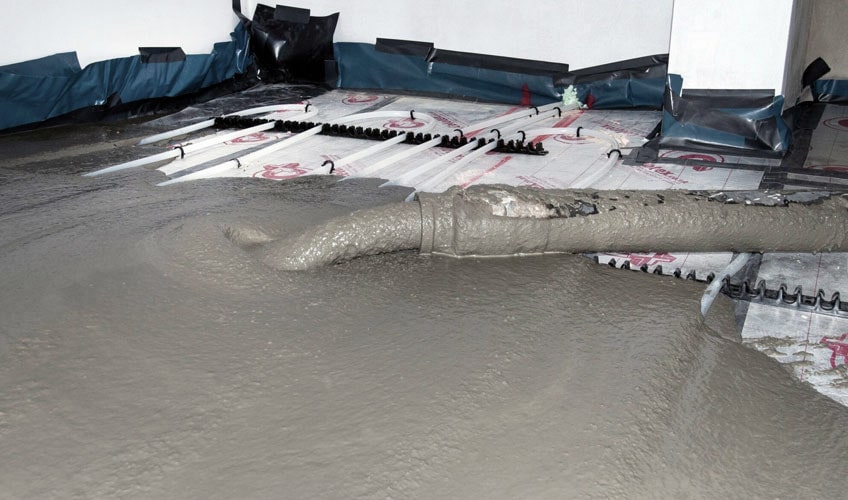
Our liquid floor screed is highly compatible with underfloor heating, as it neatly encloses pipework to eliminate air bubbles and gaps. This improves heat conductivity throughout the floor (improving the energy-efficiency of your property). 

Reduced risk of cracking or shrinkage 

Our liquid screeding contains anti-crack fibres and anti-shrink agent to improve its strength and durability. It also contains a super plasticiser for easier workability. 

Durable 

Our Wrightflow screed consists of cement, sand, limestone dust and water, helping it withstand heavy foot and vehicle traffic. 
 
To receive a quote for liquid screed delivery and installation, you can fill out our online contact form or call us directly on 0117 958 2090.

Liquid screed pump hire


When it comes to installing concrete, time is of the essence. That's why we have a range of powerful concrete pumps available for hire that can deliver liquid screed to your site quickly and efficiently, ensuring an even application and a smooth, professional finish every time. 

As seasoned liquid screed suppliers, we've tackled countless jobs over the years, giving us the versatility and expertise to take on any project, no matter how big or small. 

Our liquid screed pump hire service is the most efficient way to install liquid screed for your next commercial or DIY project. Contact us for a no-obligation quote. Alternatively, give us a call on 0117 958 2090 – our team will be happy to help.

ground line pump delivering liquid floor screed

liquid floor screed delivery over underfloor heating

When to use liquid screed flooring


When it comes to flooring options for construction and renovation projects, liquid screed is a versatile and practical choice. Unlike regular screed, liquid screed flows more smoothly and is easier to work with, making it simpler to achieve an even, level surface. 

Interior floors 

Due to its flowability, liquid screed spreads evenly across the surface of the floor. This means that it will naturally fill any gaps and crevices, including corners, without the need for manual intervention. This makes it a popular choice for interior concrete floors. 

With underfloor heating 

If you have underfloor heating, then there really is no better choice; air pockets are the enemy of heat conductivity, and using a liquid screed is the only way to eliminate these completely, ensuring that heat is distributed evenly throughout your floor. 

To discuss if liquid screed is right for your project, don’t hesitate to contact our team today on 0117 958 2090.

liquid screed flooring

Liquid Screed FAQs


Liquid screed and ready-mix concrete contain very similar components; however, liquid screed contains much finer pieces of aggregate. This gives it a smoother consistency and means it flows much more easily.

  • Liquid screed is easy to pour, and its liquid properties make it quick to dry and install.
  • It’s especially effective when combined with underfloor heating systems, as it eliminates air pockets and therefore increases conductivity. This guarantees quick and even heat supply across the floor and makes your building more thermal efficient, saving you money. 
  • Our Wrightflow liquid screed eliminates the need to seal the floor prior to laying latex, adhesive or any other cement-based product.  
  • It can also be used in wet as well as dry internal areas without degrading the screed quality. 

Liquid screed and traditional cement screed both have their advantages and disadvantages, so it's not accurate to say that one is universally better than the other.

The choice between liquid screed and cement screed depends on various factors, including the specific project requirements, the type of subfloor, and the desired finish. Our professional screeding specialists can provide more information and help you make the best choice for your project.

Yes, the advantages of flowing screed go beyond its compatibility with underfloor heating. Our Wrightflow liquid screed can be used on internal floors with or without underfloor heating.

This answer varies depending on whether the floor is bonded, unbonded, floating (commercial or domestic) or with underfloor heating. Contact a member of our team to find out the minimum thickness required for your project.

  • Remove any debris 
  • Check the sub floor for defects 
  • Install a damp proof membrane 
  • Install insulation 
  • Lay the pipework for underfloor heating (if required) 
  • Prime the floor 
  • Install an edging strip 
  • Pour the liquid screed 

For more detailed instruction, take a look at this guide to preparing your floor for liquid screed or check out our liquid screed brochure.

Yes - we require that you or an appointed representative is present at the delivery site to explain datums, undertake any adjustments to the membrane and to sign the delivery ticket as proof of delivery.

Our delivery vehicle fleet is diverse, with a uniform width of 3m (9ft) but varying lengths. For locations with restricted access, we have shorter trucks available. Additionally, our liquid screed pump hire service can ensure that even the most hard-to-reach areas are accessible.

We endeavour to meet all delivery requirements promptly - please contact our team to discuss your delivery requirements.

Between 24-48 hours is expected before you can walk on our Wrightflow screed. Cure time will depend on the thickness, and the atmosphere of the room it is being placed in, though it is typically 1 day per mm up to 40mm and 2 days per mm for the extra thickness above 40mm .  

We can give you a clearer answer once we know the details of your project, so please contact us to discuss the details of your floor screed requirements.

Like any other cement based material, liquid screed has the potential to crack. However, proper installation and curing can significantly reduce the risk of cracking

To minimise the risk of cracking, it's important to work with a professional contractor who has experience in installing liquid screed, such as ourselves. We will ensure that the mix is correct, the surface is properly prepared, and the screed is allowed to dry and cure fully. 

We do our utmost to reduce the risk of cracking further by including an anti-shrink agent, super plasticiser (to reduce the water), polypropylene fibres and limestone filler.

By using liquid screed, you can expect to achieve a more efficient and even distribution of heat across the floor, which can lead to reduced energy consumption and lower utility bills. In addition, liquid screed has a lower thermal resistance than traditional screed, which means that heat from the underfloor heating system can be transferred more quickly and effectively to the room. 

While it is difficult to give an exact figure on how much you will save on your utility bills, studies have shown that using liquid screed with underfloor heating can result in energy savings of up to 30% compared to traditional radiator heating systems.

Helpful Documents


Do you have any screed requirements? Why not contact us to find out more about the liquid screed that we supply.
We are the right people for you – let’s work together! Contact us on 0117 958 2090 today to get a quote or to find out more.

News
What Is the Safe Temperature for Pouring Concrete?
23rd February 2026

The safe temperature for pouring concrete footings in the UK is typically 5°C and rising, with no overnight frost expected. Below this point, early strength development slows, and frost damage before curing becomes more likely.

Daytime conditions can appear suitable, only for temperatures to drop sharply overnight. Cold ground and falling night air temperatures are common in autumn and winter and can affect fresh footings before adequate strength has formed.

Before placing a pour, check air temperature, ground conditions and the overnight forecast. Taking these steps reduces risk and supports long-term footing performance.

Why Temperature Matters During Early Curing

Temperature directly affects strength gain. In colder conditions, concrete takes longer to reach usable strength. This can influence when blockwork begins, when loads are applied, and when inspections take place.

Lower temperatures do not always cause visible damage, but they extend the curing period. On projects with tight programmes, this can delay follow-on trades and impact scheduling.

The Health and Safety Executive (HSE) states that employers must assess environmental risks and apply suitable controls in cold working conditions. Planning for low temperatures is part of responsible site management [1].

Temperature management applies to both extremes. We explain the risks of high temperatures in our blog, tips for laying concrete mixes in hot weather, where we note that accelerated curing can affect finish and surface quality.

The 5 Degree Rule Used on UK Sites

On most UK sites, 5°C and rising is treated as the practical minimum for pouring concrete footings. Below this point, strength gain slows, and exposure to overnight frost becomes more likely.

BS EN 206 sets requirements for concrete specification, production, and conformity, including controls for temperature during delivery and placement. In the UK, it works alongside BS 8500, which provides national provisions and guidance for site practice [2].

Using concrete supplied under recognised third-party certification schemes helps ensure production controls meet these standards.

Choosing the right mix remains important in cold conditions, and to help, we have outlined suitable options in our guide to types of concrete mix and their uses.

Air Temperature, Ground Conditions & Frost Risk

When assessing concrete pouring temperatures, look beyond the daytime forecast. Footings are often poured early in a build, so delays can affect programme continuity.

The Office for National Statistics (ONS) reported total UK construction output of £236,208 million in 2025, which just goes to show the scale and time sensitivity of the sector [3]. With such stakes in mind, reliable weather checks support consistent decision-making.

Before pouring, review:

  • Air temperature at placement.
  • Ground temperature at formation level.
  • Overnight frost forecast.

Ground can retain cold after a prolonged spell and draw heat from fresh concrete. Do not pour onto frozen ground, as thawing may lead to movement beneath the footing.

Overnight frost is often the biggest risk in the first 24 to 48 hours. The Met Office advises using localised forecasts and site-specific weather data to reduce downtime due to weather [4].

We cover these considerations in more detail in our blog, pouring your concrete in winter, which outlines practical steps for managing cold-weather pours.

How to Protect Concrete Footings in Cold Weather

When temperatures approach 5°C, protection helps retain heat generated during curing and reduces frost exposure.

Common measures include:

  • Insulating blankets applied immediately after finishing.
  • Timber or board coverings to reduce heat loss.
  • Temporary sheeting to limit wind chill.
  • Reviewing forecasts before removing protection.

Protection should remain in place until the concrete has developed sufficient strength. In colder months, curing periods are typically longer than in summer. Further details on timing and curing methods are covered in our blog, how to cure concrete, which explains best practices across different weather conditions.

Where placement time needs to be controlled, concrete pumping can support efficient delivery and reduce on-site exposure. We supply concrete pumping services across the South West.

When to Postpone & When to Call Us

Cold-weather decisions depend on more than a single temperature reading. Site exposure, wind chill, soil stability and build sequencing all influence whether a pour should proceed.

Delay a pour if:

  • Temperatures are unstable or falling rapidly.
  • Frost is forecast within hours of placement.
  • The ground has recently thawed and may shift.

Short postponements often protect overall programme certainty. Wright Readymix supplies reliable ready mix concrete suitable for domestic and commercial projects across the South West, backed by practical advice and hands-on industry experience.

Call 0117 958 2090 or get in touch to discuss your footing pour, confirm the right mix, and plan delivery around the forecast.

External Sources

[1] The Health and Safety Executive (HSE), "employers must assess environmental risks and apply suitable controls in cold working conditions”: https://www.hse.gov.uk/temperature/employer/index.htm

[2] BSI.Knowledge, “BS EN 206 sets requirements for concrete specification, production, and conformity, including controls for temperature during delivery and placement”: https://knowledge.bsigroup.com/products/concrete-specification-performance-production-and-conformity

[3] The Office for National Statistics (ONS), reported total UK construction output of £236,208 million in 2025”: https://www.ons.gov.uk/businessindustryandtrade/constructionindustry/bulletins/constructionoutputingreatbritain/december2025newordersandconstructionoutputpriceindicesoctobertodecember2025

[4] The Met Office, “advises using localised forecasts and site-specific weather data to reduce downtime due to weather”: https://www.metoffice.gov.uk/binaries/content/assets/metofficegovuk/pdf/business/sectors/construction-catalogue-guide-v2.pdf

Read more
How to Prevent Freeze-Thaw Damage in Concrete Driveways
11th February 2026

A concrete driveway can look fine in autumn and still emerge from winter with cracking, flaking, or rough patches. For many homeowners, the change might feel sudden, but the damage has often been building quietly over several cold seasons.

Understanding how to prevent freeze-thaw in concrete matters because repeated wetting and freezing places strain on the surface, particularly where water is allowed to sit. UK winters increase the risk, as temperatures often move above and below freezing rather than remaining consistently cold.

In practice, prevention comes down to five straightforward checks:

  • Is the concrete mix right for driveways?
  • Does water drain away properly?
  • Has the surface been sealed after curing?
  • Is debris cleared before winter?
  • Are edges and joints in good condition?

Addressing these areas early helps limit moisture exposure and reduce the conditions that lead to freeze-thaw damage in typical UK weather.

Why Water Saturation Is the Real Cause of Freeze-Thaw Damage

Freeze-thaw damage is driven less by cold temperatures alone and more by how easily concrete becomes saturated. All concrete contains pores, but problems arise when those pores remain filled with water for extended periods. Once saturation reaches a critical level, even routine freezing can cause surface breakdown and internal cracking.

The Environment Agency’s research into water movement through building materials shows just how quickly moisture can penetrate unprotected surfaces [1]. Testing showed that a typical masonry cavity wall can admit around 400 litres of water per hour under a 1 metre head of water, creating over 0.2 metres of internal water depth in a 3m x 3m space within five hours. Materials with better resistance to water penetration performed significantly better under the same conditions, reinforcing the importance of limiting moisture pathways at exposed surfaces.

For concrete driveways, prolonged saturation increases the likelihood of freeze-thaw damage during winter temperature swings. Reducing the amount of water that enters the surface is one of the most effective ways to slow long-term deterioration.

Early Signs Your Driveway Is Breaking Down

Freeze-thaw damage often starts below the surface before becoming visible. As moisture trapped inside concrete freezes, internal pressure builds, which gradually weakens the material. Over time, this process creates pathways for more water to enter, accelerating deterioration during each winter cycle.

Common visible signs include:

  • Fine surface cracking, often appearing after winter.
  • Surface scaling, where the cement paste flakes away.
  • Spalling, where small sections of concrete break loose.

Scientific studies show that freeze-thaw damage typically begins at a microscopic level before progressing to visible surface failure [2]. Once cracking or scaling appears, the concrete becomes more permeable, allowing further moisture ingress. Identifying these early signs makes it easier to intervene before damage affects the driveway’s long-term strength and appearance.

Why the Right Concrete Mix Makes a Long-Term Difference

Concrete for driveways needs to be specified differently from internal slabs. External concrete must withstand regular moisture exposure, temperature fluctuations, and vehicle loading. Using a general-purpose mix increases the risk of freeze-thaw damage over time.

Air-entrained concrete is commonly used for driveways because it contains evenly distributed microscopic air pockets. These pockets provide space for freezing moisture to expand, reducing internal stress and helping to limit surface cracking during cold weather.

Getting the mix right at the ordering stage plays a major role in long-term performance. A suitable driveway mix can reduce maintenance requirements and extend service life. Guidance on selecting the right option is available in our overview of the types of concrete mix and their uses.

How Winter Conditions Expose Weaknesses in Concrete Driveways

Winter conditions tend to accelerate damage that has already begun. Standing water, blocked runoff, and compacted snow all prolong the time moisture remains in contact with the concrete surface, raising saturation levels before freezing occurs.

Met Office Snow Code guidance advises clearing snow early, as compacted snow traps moisture and slows drainage [3]. It also recommends using salt or sand for grip, avoiding water that may refreeze, and applying around one tablespoon of salt per square metre to limit ice formation without unnecessary surface exposure.

During winter, practical checks should focus on how moisture behaves rather than appearance alone:

  • Does meltwater drain away or refreeze in place?
  • Are joints holding water overnight?
  • Are edges repeatedly wet and freezing?

Addressing these points helps reduce repeated freeze-thaw stress during the months when deterioration progresses most quickly. For more on this subject, we recommend our blog on how to de-ice concrete without damaging your driveway.

Get Advice on Concrete That Stands Up to UK Winters

Freeze-thaw damage rarely results from a single cold winter. It is more often the result of repeated moisture exposure, unsuitable concrete specifications, and small maintenance issues that accumulate over time. Addressing these factors early gives concrete driveways a far better chance of performing well through UK winters.

Wright Readymix supplies ready mix concrete for driveway projects across the South West and provides practical advice on specifying mixes suited to external conditions. Local availability can be checked via our areas we cover page, and quantities can be planned accurately using our concrete volume calculator before work begins.

Call 0117 958 2090 or get in touch to discuss concrete for your driveway and receive advice on a specification designed to withstand winter weather.

External Sources

[1] GOV.UK, Environment Agency, “research into water movement through building materials”: https://assets.publishing.service.gov.uk/media/602d673ee90e0709e8d085d8/Improving_the_Flood_Resilience_of_Buildings_Through_Improved_Materials__Methods_and_Details_Technical_Report.pdf

[2] Science Direct, Guler, Funda Akbulut, “Scientific studies show that freeze-thaw damage typically begins at a microscopic level”: https://www.sciencedirect.com/science/article/abs/pii/S2352012425006186

[3] Met Office, “Snow Code guidance”: https://weather.metoffice.gov.uk/warnings-and-advice/seasonal-advice/your-home/clearing-paths-and-driveways

Read more
How to De-Ice Concrete Without Damaging Your Driveway
26th January 2026

Icy concrete driveways are a common issue during UK winters, and knowing how to de-ice concrete correctly can make a real difference to how well the surface performs over time. One icy morning is often all it takes for people to reach for salt, hoping for a quick way to make the driveway safe.

The problem is that concrete, particularly when new, recently repaired, or unsealed, does not respond well to the wrong treatment. When water enters the surface and freezes repeatedly, it creates internal pressure that can lead to surface scaling, spalling, and long-term weakening. This damage rarely appears immediately, which is why it is often overlooked until repairs are necessary. The safest way to de-ice concrete is to control moisture, timing, and product choice.

This guide explains what happens beneath the surface, which de-icing methods are safest, and how to protect concrete driveways during cold conditions without shortening their lifespan.

What Happens to Concrete When Ice & Moisture Take Hold

Concrete laid, extended, or repaired in cold conditions is particularly vulnerable to freeze–thaw damage because of how water behaves within the material. Fresh concrete contains pores within the cement paste that can fill with moisture. When temperatures fall, this water freezes and expands, creating internal pressure.

The Concrete Society explains that damage occurs when the expansive force from freezing water exceeds the local strength of the concrete [1]. This risk is highest when concrete is saturated at the point of freezing, which is common during winter driveway work when curing is incomplete or surface protection is limited.

Over repeated freeze–thaw cycles, this pressure can lead to surface scaling, cracking, or disintegration to the depth reached by freezing conditions. In driveway applications, deterioration often develops gradually, as flaking surfaces or weakened edges, rather than in an immediate failure.

Joints between old and new concrete in driveway extensions or repairs are especially sensitive, as they can retain moisture more easily. Managing saturation, protecting curing concrete, and avoiding early de-icing treatments are key to reducing winter-related damage.

Why De-Icing Should Be Avoided While Concrete Is Still Curing

While concrete is curing or bedding in after repairs, the surface is still gaining strength and remains more porous than fully cured concrete. During this stage, introducing meltwater through chemical de-icers increases the risk of moisture entering the surface before freezing conditions return.

De-icers that melt ice create water that can soak into the concrete and refreeze overnight, placing stress on a surface that has not yet stabilised. For this reason, chemical de-icers should be avoided wherever possible during curing and early repair stages. Physical ice management is a safer alternative.

Practical options during this period include:

  • Using sand or grit to improve traction without introducing meltwater.
  • Clearing snow early before it compacts and bonds to the surface.
  • Protecting new concrete overnight during frosty conditions, when required.

Managing Ice Safely Once a Concrete Driveway Has Cured

Once concrete has fully cured and developed sufficient surface strength, limited de-icing may be considered where access and safety require it. At this stage, product choice and application control are more important than volume.

Calcium chloride can be used sparingly after curing because it works at lower temperatures and requires smaller quantities. It should be applied lightly, only to high-risk areas, rather than across the entire driveway. Rock salt, or sodium chloride, should still be avoided on recently completed or repaired driveways, as it produces salty meltwater that increases moisture exposure and refreezing risk.

Grit or sand remains a reliable option for slip resistance without introducing additional moisture. Where de-icers are used, restraint is essential.

The Concrete Society explains that concrete can deteriorate sooner than expected when high concentrations of de-icing salt dissolve into solution and are absorbed by the concrete wearing layer [2]. To reduce localised salt build-up, a spreader is recommended rather than applying salt by shovel.

Preventative Steps During & After Driveway Works

To reiterate, preventing ice build-up is usually safer than trying to melt it away, particularly while concrete is curing or bedding in after repairs or extensions. At this stage, the goal is to limit surface moisture so freezing conditions do not place unnecessary stress on the concrete before it has stabilised.

Practical steps that help during cold weather include:

  • Clear any snow early before it compacts and bonds to the surface.
  • Keep drainage routes open, so meltwater runs away from the slab.
  • Avoid standing water near joints, edges, and repaired sections.
  • Use grit for traction instead of introducing meltwater.
  • Cover new concrete overnight during frosty conditions, when required.

Once curing is complete, applying a suitable concrete sealer can help reduce long-term moisture absorption and make winter maintenance easier. Sealing should only be carried out after full curing, as early sealing can trap moisture and degrade surface performance over time.

Get the Right Concrete Mix & Winter Advice for Your Driveway

Good winter practice helps protect the strength and finish of a concrete driveway during laying, extension, or repair work. Clearing snow early, managing drainage, and avoiding heavy de-icing while concrete is still curing reduces freeze–thaw stress and lowers the risk of long-term surface damage. Where de-icing is necessary after curing, light and targeted application remains the safest approach.

As a leading manufacturer and supplier of ready-mix concrete, liquid screed, and concrete pumps for hire in the South West, Wright Readymix supports domestic, trade, and commercial projects with driveway mixes. Our team can advise on concrete for driveways and supply suitable ready-mix concrete, whether you are managing a small DIY project or coordinating a larger commercial pour. Practical tools such as our concrete volume calculator, along with our FAQs and customer testimonials, help ensure projects are planned correctly from the outset.

Call 0117 958 2090 or get in touch to discuss your driveway project, confirm the right concrete mix, and arrange delivery when you need it.

External Sources

[1] The Concrete Society, “damage occurs when the expansive force from freezing water exceeds the local strength of the concrete”: https://www.concrete.org.uk/fingertips/damage-due-to-freeze-thaw/

[2] The Concrete Society, “concrete can deteriorate sooner than expected when high concentrations of de-icing salt dissolve”: https://www.concrete.org.uk/fingertips/de-icing-salts/

Read more
What is High-Performance Concrete & When is it Used?
05th January 2026

High-performance concrete is chosen for projects that need reliable strength, durability, and steady performance over time, especially in tough conditions. It is mainly used in commercial, industrial, and infrastructure projects where regular concrete might not handle the demands.

In busy infrastructure, industrial, and large commercial projects, early cracks, surface problems, or unexpected repairs can disrupt work and raise costs long after construction ends. These issues often come from choices made during the planning stage, especially if exposure, traffic, or access needs are not fully considered.

When contractors and engineers plan for durability, load, and service life during mix design, they lower risks and make the structure’s long-term performance more predictable.

How High-Performance Concrete Is Defined in Practice

High-performance concrete is defined by the results it needs to achieve on site and in use. Its specification focuses on strength, durability, low permeability, resistance to the environment, and steady performance during placement and over its design life.

In real projects, the definition depends on how the concrete will be used. Factors like load, moisture, harsh environments, access, and expected lifespan all affect the mix design. This helps the concrete work well both during placement and in long-term use.

Focusing on performance also helps with planning, especially when supply can change. The Department for Business and Trade reported that ready-mixed concrete sales dropped by 4.3% in Quarter 2 2025 compared to Quarter 1, and were 4.7% lower than in Quarter 2 2024 [1]. These numbers show why it’s important to specify and order concrete early for commercial and infrastructure projects.

We work with The LGW Group to supply concrete for commercial and infrastructure projects where performance needs are clearly set out from the start.

When High-Performance Concrete Becomes the Right Specification Choice

High-performance concrete is usually chosen earlier in the design process than standard mixes, especially when performance goals are clear. Engineers and contractors use agreed exposure levels, load assumptions, and schedule limits to make sure the concrete meets both structural and construction needs.

Specifying the concrete early lets teams plan the mix, placement, and logistics before work begins. This helps avoid last-minute changes, keeps delivery consistent, and lowers the risk of problems that could cause extra work or delays.

Infrastructure Assets Built for Heavy Load & Long Design Life

High-performance concrete is often used in road and transport projects where heavy loads and long service life are needed. National Highways says about 400 miles, or 4%, of England’s motorways and main A-roads are made of concrete, much of it built in the 1960s and 1970s [2].

Even though traffic is much heavier now, these concrete roads have lasted longer and needed less maintenance than asphalt. Their strong, long-term performance is why performance-based concrete is still used on key transport routes.

Industrial Floors That Must Perform Under Constant Demand

In industrial and commercial settings, concrete floors need to handle heavy loads, vehicle traffic, and constant use. Warehouses, factories, and distribution centres often choose high-performance mixes to keep surfaces strong and avoid work interruptions.

Performance-based floor mixes are often chosen when:

  • Frequent forklift or HGV traffic is expected
  • High racking loads or fixed machinery place sustained pressure on slabs
  • Large pours require consistent behaviour to achieve uniform finishes

In these situations, reliable performance during placement and curing helps prevent early problems and keeps the project on schedule.

Projects Where Access Constraints Leave No Margin for Error

On crowded sites, phased projects, or places with limited access, being able to place concrete predictably is essential. Good control over workability and setting helps avoid delays, cold joints, and finish problems, especially when pours need to be done quickly.

Where access or placement requires additional control, our team supports performance-led pours through our concrete pumping service.

What High-Performance Concrete Delivers Over the Life of a Structure

High-performance concrete helps plan for the full life of a project by making future repairs less likely. While it may take more planning at first, the real value is in fewer repairs, less downtime, and more reliable performance over time.

For developers and owners, this approach matches material choices to the risks of running the asset, especially when access is hard or disruptions could be costly or affect the public.

Durability That Protects Asset Life & Reliability

High-performance concrete is chosen to resist water, freeze-thaw cycles, heavy traffic, and tough conditions. Focusing on durability in the mix helps the structure last longer and lowers the chance of early problems.

This focus matches concerns in the industry. In 2025, the Institution of Civil Engineers (ICE) said engineers worry about the safety and reliability of UK infrastructure, especially road bridges [3]. They point out that poor durability and reactive repairs shorten asset life and cause more disruptions.

More Predictable Results During Placement & Finishing

Good control over workability and setting leads to reliable results during placement and finishing. This matters most for large pours, structural parts, or tight schedules, where changes can cause problems or delays.

For contractors, this supports greater on-site control, more consistent finishes, and fewer remedial works that can disrupt follow-on trades.

Reduced Intervention & Fewer Unplanned Disruptions

High-performance concrete aligns with modern procurement and performance-based contracts that prioritise defined outcomes over minimum compliance. Design and build arrangements, performance specifications, and long-term operation agreements increasingly require materials to meet clear service expectations.

When mix design is tied directly to performance goals, project teams face less confusion during delivery and handover. This leads to clearer responsibility, easier approvals, and fewer arguments about material performance later on.

Plan High-Performance Concrete into Your Project

When planning to use high-performance concrete, set your requirements early so the mix matches the job. Think about exposure, loads, access limits, and how much room there is for fixes if needed.

Some practical planning steps include:

  • Confirm performance requirements at the specification stage
  • Estimate volumes accurately to support scheduling and delivery
  • Confirm placement method early on constrained or complex sites

Wright Ready Mix offers helpful tools for planning, like a concrete volume calculator to estimate how much you need before ordering. If you have questions about delivery, placement, or other services, check our FAQs or read customer feedback on our testimonials page. For updates and news, visit our news page.

Call 0117 958 2090 or contact us to talk about your project needs.

External Sources

[1] GOV.UK, “The Department for Business and Trade”: https://www.gov.uk/government/statistics/building-materials-and-components-statistics-july-2025/construction-building-materials-commentary-july-2025

[2] National Highways: https://nationalhighways.co.uk/our-roads/concrete-roads/

[3] Institution of Civil Engineers (ICE): https://www.ice.org.uk/news-views-insights/inside-infrastructure/does-asset-maintenance-need-a-fairy-godmother

Read more